Additions
Is a Home Addition Worth It? A Look at ROI for DFW Homeowners
When adding square footage makes financial sense, when it doesn't, and how the major addition types compare on cost, timeline, and return across DFW.
Moving is expensive, disruptive, and — in a tight DFW market — often means giving up a neighborhood you love. So more homeowners are asking the same question: is it worth it to add on instead of moving up? Here's an honest look.
The case for adding on
When you love your location, lot, and schools, an addition lets you keep all of that while solving the thing that's actually bothering you — usually space. Compared to moving, you avoid agent commissions, closing costs, and the premium you'd pay for a bigger home in the same area. For many families, the math favors staying.
The major addition types, compared
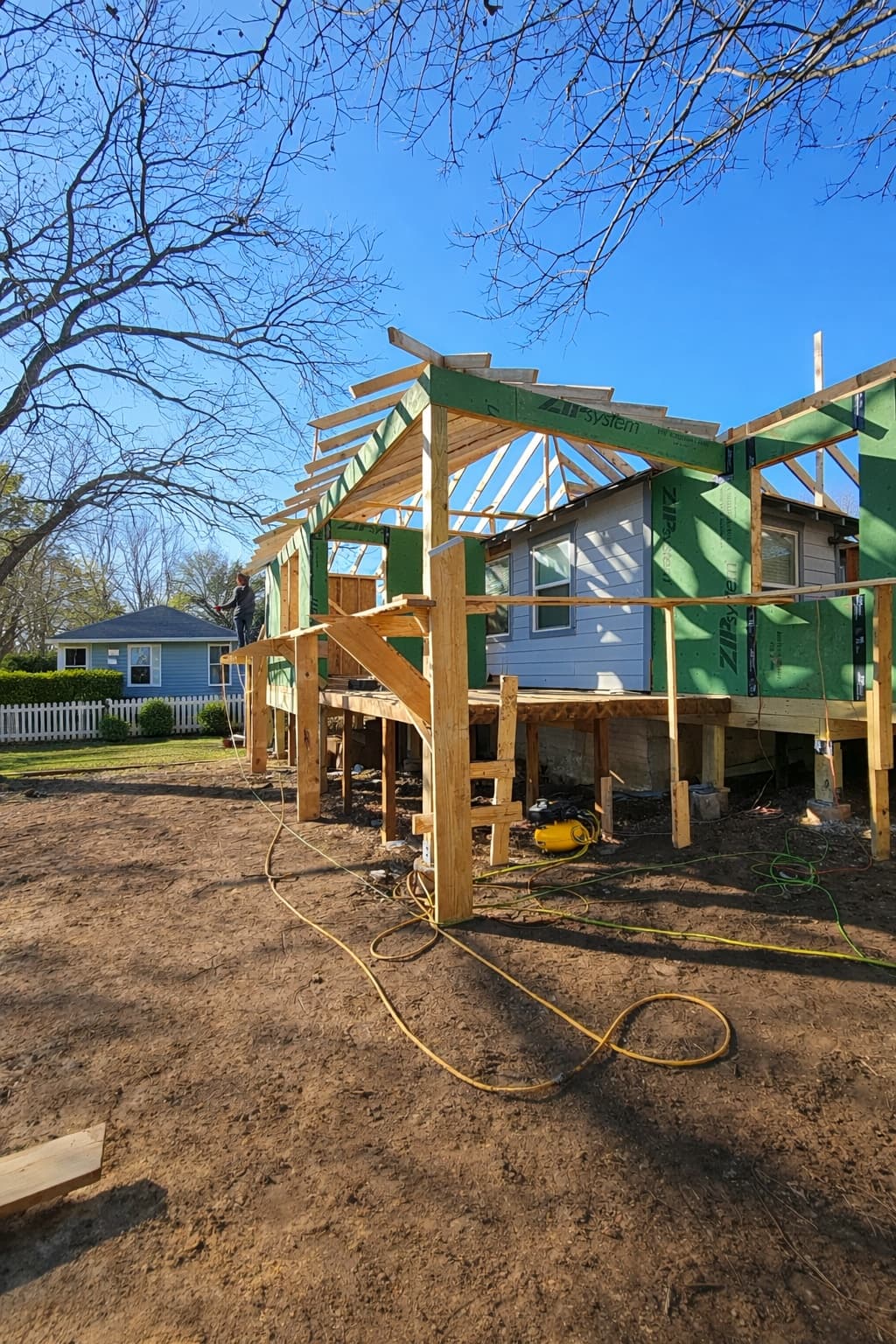
Not all additions are equal — the structural approach drives cost and timeline more than anything else:
- Bump-out ($50K–$125K): Extend an existing room 50–150 sq ft. The most budget-friendly way to gain space. 3–5 months.
- Attic conversion ($75K–$175K): Turn unused attic into bedrooms or an office. Often needs structural reinforcement and a dormer. 4–7 months.
- Ground-level addition ($125K–$250K+): Expand the footprint outward with a new foundation. 5–8 months.
- Second-story build-up ($150K–$300K+): Add a full floor. The biggest scope — and the biggest transformation. 6–9 months.
You can get a tailored range for any of these with our addition cost calculator, or read more on our home additions page.
What actually drives the return
A few factors matter more than the rest:
- Right-sizing for the neighborhood. The best returns come from bringing an under-sized home up to par with its block — not building the most expensive house on the street.
- Adding the right room. A primary suite, a real second bathroom, or functional family space tends to return more than niche, single-purpose rooms.
- Seamless integration. An addition that looks original — matching rooflines, finishes, and proportions — protects value. One that looks bolted on can hurt it.
- Quality of work. Permitted, properly engineered work shows up at resale (and at inspection). Cut corners don't age well.
When it might not be worth it
We'll say it plainly: an addition isn't always the answer. If you'd be over-improving for the neighborhood, if your real problem is layout rather than square footage (a remodel may fix it for less), or if you're planning to move within a couple of years, the numbers can get tough. A good contractor will tell you that before you spend.
Think it through with us
If you're weighing an addition against a move — or against a remodel — we're glad to walk the options honestly. Estimate your addition, explore our project case studies, or book a free consultation.